Enjoy making something you can hear
Listening to a favourite song is rewarding; learning to play even a small part of it adds a different kind of involvement. You begin to notice rhythm, chord changes and the choices that give a phrase its character. Progress may be modest at first, such as changing between two chords without stopping. That still produces an audible result you can recognise. Choose music that interests you rather than assuming you must begin with a particular genre to be a legitimate learner. Enjoyment gives regular practice a purpose.
Build a practical learning routine
An instrument gives you a manageable setting in which to work toward small goals. Instead of practising vaguely for a long time, decide what you want to improve: one chord change, a steady rhythm or the ending of a phrase. Work on it slowly, then check the result. Short, attentive sessions can fit around school, work and family commitments. Keep the instrument accessible and prepare what you will play next. This is a useful habit in its own right, without claiming that music automatically transforms every other area of life.
Find a creative outlet
You can make music before you know advanced theory. Change the rhythm of a familiar progression, invent a short melody or choose a different ending to an exercise. Recording a rough idea allows you to return to it later and hear what you meant. Creativity does not require every attempt to be original or polished. It involves exploring choices and gradually learning which ones communicate something you enjoy. A teacher can help turn an uncertain idea into an achievable task while keeping your own musical interests at the centre.
Connect with other people at your own pace
Playing with someone else introduces listening, timing and shared decisions. That might mean a simple duet with a teacher, a casual session with a friend or eventually joining a group. Public performance is optional; you can enjoy music privately without treating a stage as the final test. If you do want to play with others, begin with a piece that feels comfortable and agree a steady tempo. A simple part played reliably can make a valuable contribution. Confidence grows through suitable experiences, rather than pressure to prove yourself immediately.
Keep expectations kind and realistic
Progress is uneven. Some skills become comfortable quickly, while others need repeated attention. Comparing yourself with edited performances online can hide the time and support behind them. Record a short example occasionally so you can compare your playing with your own earlier attempts. Stop and seek guidance if a technique causes pain rather than treating discomfort as a necessary milestone. The reasons to learn do not depend on promises about IQ, memory, health outcomes or academic admission. Enjoyment, expression and the music itself are sufficient reasons to begin.
Take a useful first step
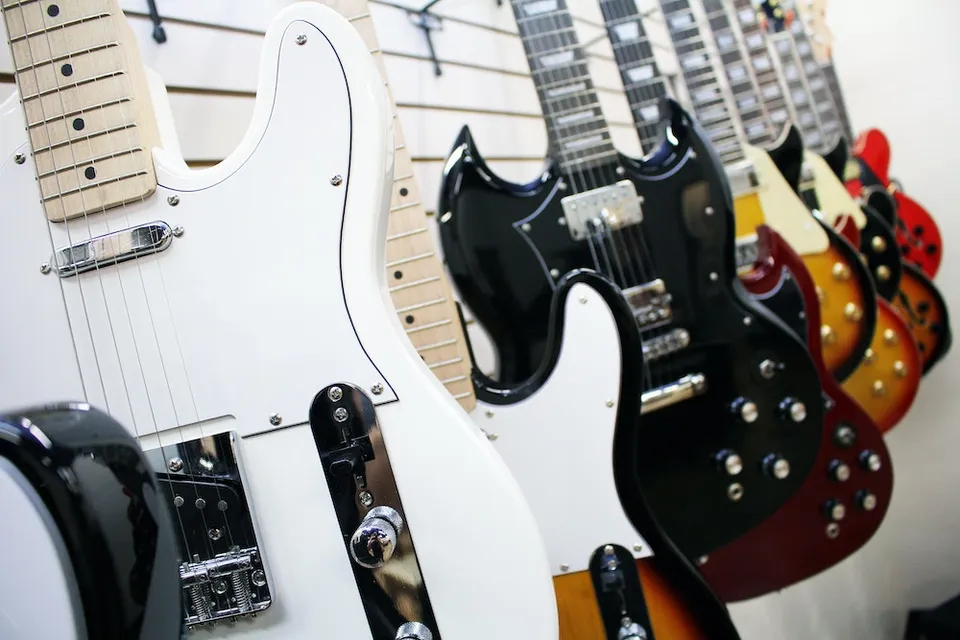
Choose an instrument you can handle comfortably and a realistic opportunity to practise. Write down a few songs or styles you enjoy and any previous experience, even if it was many years ago. Ask questions about lessons, equipment and what a first session involves. For guitar, our first-guitar guide can help you compare options without assuming that the most expensive instrument is the best starting point. Begin with one achievable goal and give yourself permission to learn gradually. You can decide how far you want to take it as your interests develop.
Related recordings
These accompanying recordings offer listening examples. Equipment demonstrations reflect their original context; follow the guidance for your own instrument and equipment.